
Inglês — CACD 2004
CESPE/UnB · CACD – 1ª fase (TPS) · 20 itens · julgue cada item como Certo ou Errado
Quer responder e ver o gabarito comentado?
Na Lumen você marca Certo ou Errado, vê o gabarito e o comentário de cada item, acompanha seu desempenho por matéria e estuda pelo edital verticalizado.
Cadastre-seText I
A taxing battle
The Economist, January 31st - February 6th, 2004, p. 71 (with adaptations).
Judge if each item below presents a correct rewriting of the information contained in lines 6 to 12 of text I.
- 1.
In the latest revelation, Dick Thornburgh, the man in charge of evaluating the failure of World-Com, issued hearsay evidence stating that, not only many other crooked dealings are to be attributed to broken telecoms company, but that it also deprived the Internal Revenue Service (IRS) of great sums of dollars using a tax device invented by KPMG, its auditor.
- 2.
In the last revelation on January 26th, Dick Thornburgh, the man accredited to look into the breach of World-Com, reported that, as well as a slew of other false dealings for which the undermined telecoms companies are to be criticised, it also defrauded the Internal Revenue Service (IRS) of heaps of dollars through a tax cover created by KPMG, its accountant.
- 3.
In the latest revelation on 26th January, Dick Thornburgh, the man nominated to examine the fall of World-Com, delivered a report saying that, as well as a lot of other dishonest transactions of which the insolvent telecoms company is blameworthy, it also swindled the Internal Revenue Service (IRS) out of hundreds of millions of dollars in taxes by means of a tax shelter dishonestly invented by KPMG, its auditor.
Text II
The world’s major economies are ① ______ and 2004 looks likely to be the best growth year for the United States since the tech bubble ② ______. There are signs that Japan and Germany may finally be turning the corner after years of ③ ______. Yet doubt still hangs over the big economies like a cloud, producing an increasingly joyless recovery. As global chieftains gather this week at the World Economic Forum in Davos to mull over the theme of prosperity and security, they are finding that prosperity is returning most brightly outside the major markets, in places like China, Southeast Asia and even parts of Latin America and Africa. There is still plenty of talk of bubbles and overheating in some emerging markets, but not all markets are created equal, and a pack of bulls believes a new golden age is falling on these countries as a whole. “This is turning out to be the best period for emerging markets since 1993,” says Ruchir Sharma, co-head of global emerging markets at Morgan Stanley.
The economic forecasters back up the bulls. Southeast Asia is predicted to grow faster than 6 percent, Russia and Poland more than 5 percent, Africa better than 4 percent, and even beleaguered Latin America is expected to rise above 3 percent. According to Global Insight’s research, the growth rebound will be most dramatic in current or former pariah economies: Venezuela will snap back from a 10 percent recession in 2003 to top 5 percent this year, and growth in war-torn Iraq will jump from negative 21.2 percent to a positive 39.7 percent.
Newsweek, January 26th, 2004 (with adaptations).
Considering the ideas and expressions found in text II, judge the following items.
- 4.
From the text, it can be inferred that the global recovery is oddly joyless in big markets, newly confident in emerging ones.
- 5.
Blanks numbered ①, ② and ③ can be properly filled in with picking up, burst and sluggishness respectively.
- 6.
According to the economic forecasters, in 2004 Southeast Asia will grow faster than Russia, which will grow more than Africa and Latin America. Venezuela will decrease 5 percent this year and Iraq will jump 60.9 percent from 2003 to 2004.
Text III
Document from the US State Department (with adaptations).
In relation to the text above, judge the following items.
- 7.
In line 18, the phrase “an enormous stake” indicates that the United States is facing huge financial losses to keep up the sustainable management of the world’s forests.
- 8.
In line 13, the word “replenish” is synonymous with fill up.
- 9.
The main idea of the text can be correctly said to be: The problem of deforestation seems to overcome the human capability of finding a final solution to it. Lots of economic interests prevail over the unquestionable need to control the sensible use of the forests worldwide. Forest management turns out to be a crucial factor not only for rural but also for urban life. The effect of the pharmaceutical industry on forest resources is rather alarming, and that is the reason why the USA is so keen on trying to maintain the sustainable management of the world’s forests.
- 10.
In lines 21-22, the phrase “a vested interest in protecting” can be correctly replaced by a particular reason to protect.
- 11.
In line 6, the word “unsound” means unheard.
- 12.
The text can be associated with the following statement: The leaves of the trees are for the healing of the nations.
Text I
A taxing battle
The Economist, January 31st - February 6th, 2004, p. 71 (with adaptations).
Still in relation to text I, judge the following items.
- 13.
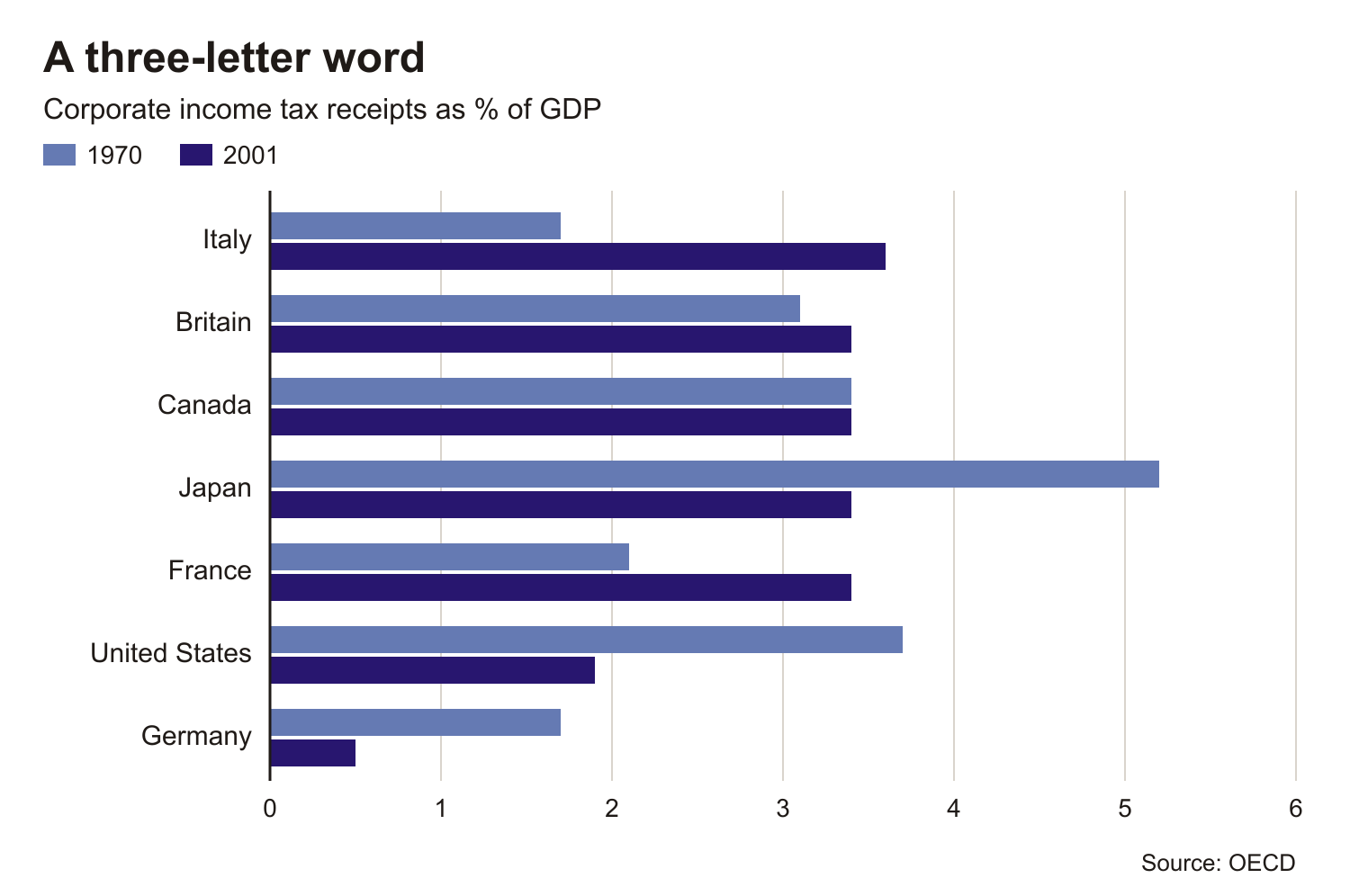
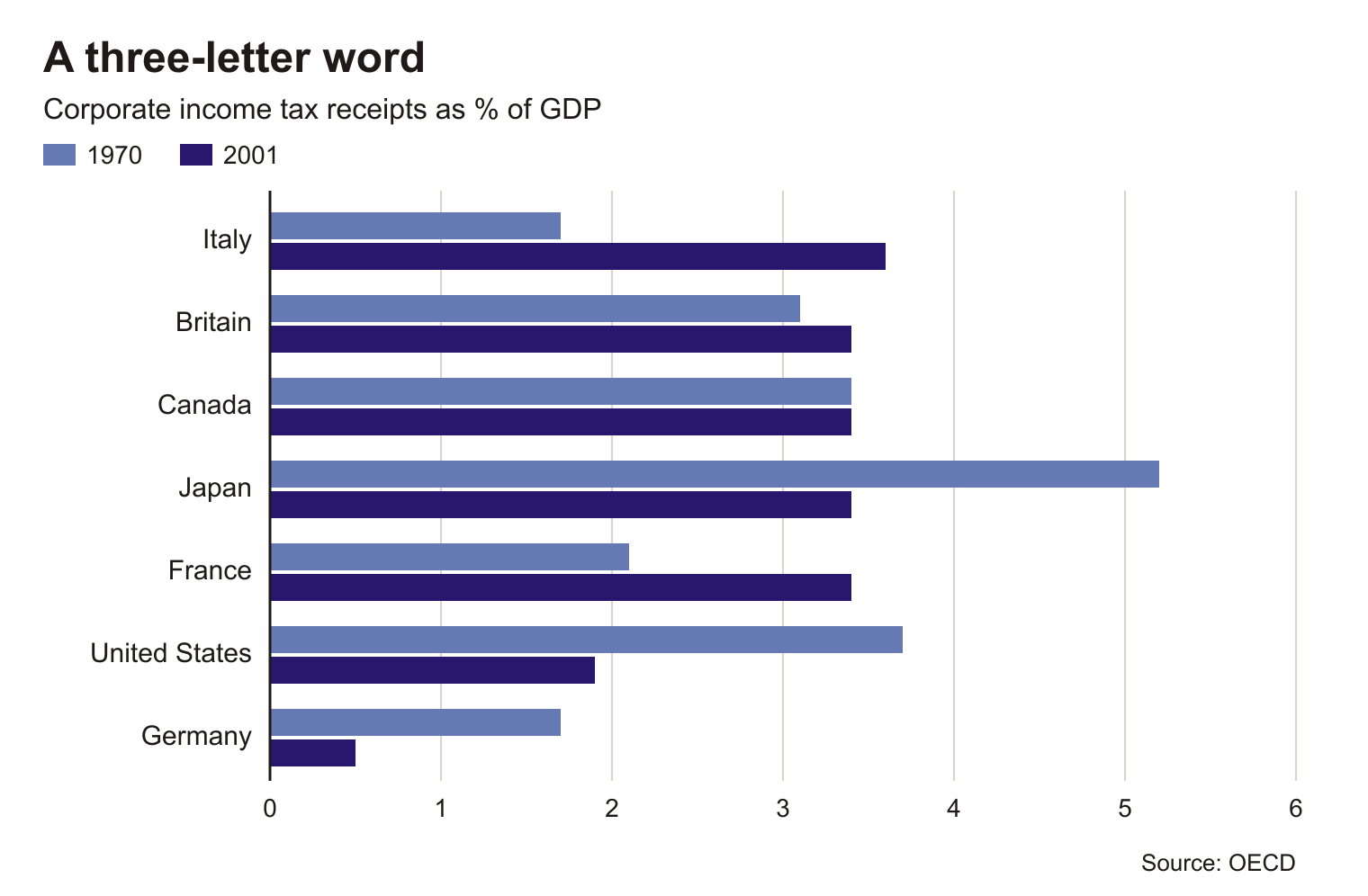
The author’s purpose is to show that governments around the world are scrabbling for scarce corporate taxes.
- 14.
According to the graph, from 1970 to 2001, accumulated corporate income tax receipts in North American countries displayed better results than the European ones.
- 15.
The expression “fret that such cases are the tip of a large iceberg” (l.13-14) means that many other similar cases have been found.
- 16.
The substitution of the phrase “slew of” (l.9) and the verb “boost” (l.19) by mess of and soar respectively would keep the same semantic and syntactic relations as those presented in the text.
Text IV
Daily Telegraph, London, February 23rd, 2004 (with adaptations).
Concerning the text above, judge the following items.
- 17.
The verbal phrase “striking at” (l.15) indicates that the UN is striving to establish the principle of territorial jurisdiction.
- 18.
It is correct to conclude from the text that its author seems to favour Mr Sharon’s decision to raise a fence on the West Bank, despite the reaction of some Israel’s traditional friends. Although the author himself refers to some points which could have negative effects on the Palestinians, he does not show a counterargument to them.
- 19.
In line 1, the phrase “in the dock” means accused in court, and, in line 16, “underpins” can be correctly replaced by supports.
- 20.
In the text, the original phrase “should have come before the Hague judges at all” (l.11) can be correctly replaced by should have come before the Hague judges in the first place.
Quer responder e ver o gabarito comentado?
Na Lumen você marca Certo ou Errado, vê o gabarito e o comentário de cada item, acompanha seu desempenho por matéria e estuda pelo edital verticalizado.
Cadastre-se